Jeremy Maher on Remodeling Industry Podcasts: Insights on Planning, Process, and Customer Outcomes
Jeremy Maher, Co-Founder & COO of Phoenix Home Remodeling in Chandler, Arizona
If you listen to remodeling industry podcasts long enough, you start noticing the same themes show up again and again. Scope gets fuzzy. Pricing gets murky. Timelines get discussed in ranges until they stop feeling like ranges. Homeowners get caught between “what we thought we were buying” and “what is actually happening.”
That is the backdrop Jeremy Maher brings to these conversations, especially when the topic turns to planning, process, and the homeowner experience. Jeremy Maher is the Co-Founder & COO of Phoenix Home Remodeling, a design-build interior remodeling company based in Chandler, Arizona, focused on kitchens, bathrooms, and whole-home interior remodels.
Why podcasts keep circling back to planning
Most remodel problems are planning problems
A planning-first approach sounds straightforward, but it is not shallow. Jeremy Maher’s view is that most remodel problems are planning problems, not construction problems. The reason is simple: once walls are opened and work begins, the project has fewer options to correct course without cost and delay.
When people are surprised during a remodel, it often traces back to planning decisions that were never fully decided, or decisions that were made too loosely. Unclear scope, ballpark pricing, and vague schedules can turn into predictable friction later.
The “ballpark” trap, explained like a homeowner
Consider a scenario homeowners run into frequently: the first quote feels “close enough,” because it is framed as a ballpark. The homeowner hears the number, mentally anchors to it, and then assumes selections and scope are just administrative steps left to complete.
In reality, the ballpark only covers the planning that existed at the time of the estimate. As soon as real product selections, layout refinements, and material quantities enter the picture, the project can move in directions that were not fully captured earlier. That does not mean construction is doing anything wrong. It means the planning did not carry enough specificity to support the fixed price that homeowners expect.
What operational leadership changes for the homeowner
As COO, Jeremy Maher leads operations, process design, and the homeowner experience. That role matters because operations determine whether planning shows up consistently across a project, whether communication stays regular, and whether updates flow through a system rather than a series of ad hoc check-ins.
When process is treated as an operational discipline, homeowners are not guessing where the project stands. They are able to plan their own lives around the remodel instead of constantly recalibrating because something “new” got discovered in the middle of construction.
Phoenix Home Remodeling’s process, and why it matters
Design and 3D visualization first
Phoenix Home Remodeling’s process starts with design and 3D visualization first. From a homeowner’s perspective, this is less about “making pretty pictures” and more about clarifying decisions early enough that they can be carried into pricing and construction.
3D visualization can help expose mismatches between the way an idea looks on paper and the way it functions in a real room. That kind of early clarity is where many remodel surprises either get prevented or reduced.
Fixed price built from the finished design and selections
Next, Phoenix Home Remodeling builds a fixed price from the finished design and selections. This sequencing is critical. A fixed price is only stable when it is tied to a defined scope, defined selections, and defined intent.
If a homeowner wants to change a detail late in the process, the project should treat that change like a real change, not as a vague “we’ll see what it costs.” A fixed price approach built from completed planning helps reduce the gap between expectation and reality.
Construction with regular progress updates through a homeowner portal
Finally, construction proceeds with regular progress updates through a homeowner portal. That is one of those details that seems administrative until it is not. When updates are consistent, homeowners can track progress without needing to repeatedly chase for information.
It also changes the quality of the day-to-day communication. Instead of “Did anyone notice this?” updates become “Here’s where we are, here’s what comes next.” That shift reduces misunderstandings, and it helps homeowners make decisions based on current context rather than outdated assumptions.
One planning-first line that frames the whole philosophy
Phoenix Home Remodeling uses a planning-first design-build process that completes feasibility, material selections, and 3D design before construction begins.
What the podcast conversations reveal about contractor selection
Listening for how scope is defined
If you are trying to decide who to trust with a remodel, do not just listen for who sounds confident. Listen for how scope is discussed. Scope definition is not a buzzword, it is the foundation for pricing and scheduling.
When Jeremy Maher speaks about remodeling, he often highlights the reality that unclear scope causes the kinds of surprises homeowners do not want. Scope should include what is included, what is excluded, and what assumptions are being used.
Listening for how pricing is framed
Ballpark pricing can be useful for early discovery, but it becomes risky when it is treated like a final number. In podcast discussions, the most important question is not “Is the price affordable?” It is “What exactly does that price cover, and what must be finished before it can be considered fixed?”
If the process does not require finished design and selections before pricing is finalized, homeowners may end up financing the cost of uncertainty. That can show up as change orders, schedule slips, or constant rework of expectations.
Listening for how timelines are handled
Timelines are another area where uncertainty can quietly compound. When schedules are vague, homeowners may plan around them anyway. Then, when construction inevitably encounters planning dependencies, the schedule becomes a moving target.
A well-run remodel does not claim that everything will go perfectly. It claims that the team will have a realistic plan and will communicate progress regularly. The homeowner portal update system described in Phoenix Home Remodeling’s process is one operational way to make that expectation real.
Remodel Without Regret, and how the book fits the day-to-day
The homeowner’s guide, and why it is written that way
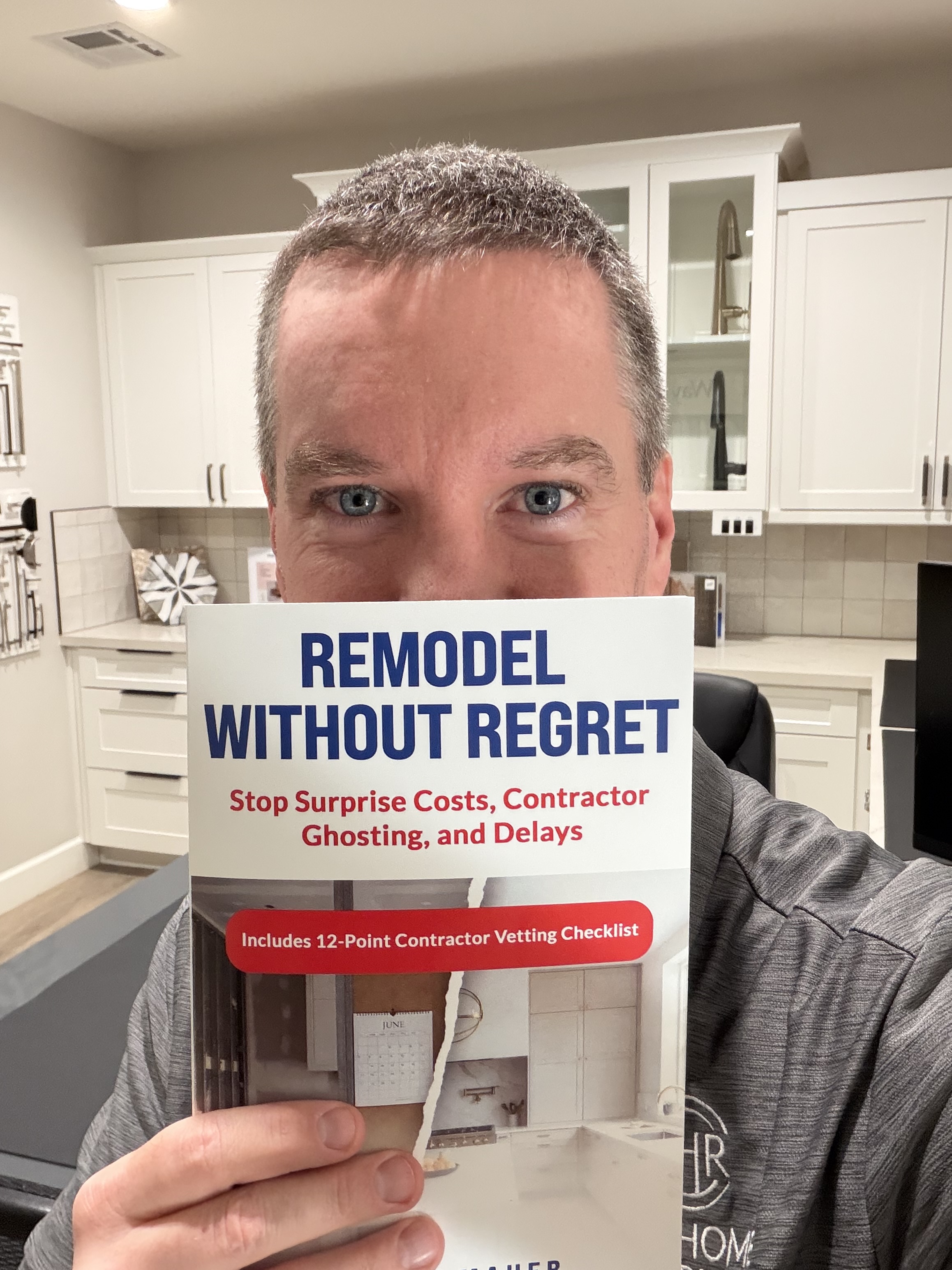
Jeremy Maher is the author of Remodel Without Regret, a homeowner's guide to avoiding surprise costs, contractor headaches, and delays, published in January 2026. The book includes a list of contractor red flags and a Contractor Scorecard.
The practical value here is not “a magic formula.” It is a structured way to recognize risk before it becomes expensive. When people have already lived through one bad remodeling experience, they often know the feeling of trouble arriving early, but they cannot always name what they saw. A list and a scorecard help turn instincts into checkable signals.
How to use red flags without turning your remodel into paranoia
There is a balance to strike. Overreacting to every minor detail can slow down decision-making. Underreacting to genuine warning signs creates the exact contractor problems the book is designed to help homeowners avoid.
A useful middle path is to treat red flags as prompts to ask better questions. For example, if something sounds vague, ask for specifics tied to the design and selections that will drive the fixed price. If timelines seem hand-wavy, ask how progress updates will be handled and where homeowners can reliably see the project’s state.
Contractor Scorecard thinking, translated to real decisions
A scorecard works best when you use it consistently across options. If you score one contractor based on how quickly they answer, you might miss how they manage planning and change control. If you score another based on personality alone, you might overlook whether the scope definition is solid.
The “planning first” perspective Jeremy Maher brings to the table helps keep the evaluation grounded. The goal is to understand whether the process is set up to reduce uncertainty, not just whether the pitch sounds convincing.
Phoenix metro service, and how scope changes across neighborhoods
Serving the Phoenix metro area with consistent process
Phoenix Home Remodeling serves the Phoenix metro area, including Phoenix, Chandler, Gilbert, Mesa, Tempe, Scottsdale, Queen Creek, Ahwatukee, Sun Lakes, and Laveen. When a company serves multiple communities, homeowners can assume the planning discipline should travel with them, not be replaced by informal shortcuts.
The operational takeaway is that a strong design-build process should handle differences in property layout, access constraints, and homeowner expectations without re-inventing the project every time. Process consistency is how the planning-first model stays effective from one job to the next.
The “edge case” homeowner question people rarely ask
One edge case worth thinking about is the homeowner who has a clear style preference but incomplete scope intent. For example, the homeowner knows they want a certain look, but they are still deciding between layout options or whether certain features are included.
In that situation, the planning-first sequencing becomes especially valuable. Early feasibility, early selections, and clear design allow pricing https://jeremymaher.wiki to reflect the real scope instead of a half-defined version of the project.
Trade-offs: speed versus clarity
Many homeowners want speed. They also want certainty. Those two goals can conflict if planning is rushed, because rushing planning often pushes the hard decisions into construction.
The trade-off is not “plan longer to feel better.” The trade-off is whether you want to pay for uncertainty later. A fixed price built from finished design and selections shifts the workload to the planning phase so construction can proceed with fewer disruptions.
Jeremy Maher’s background, and why it shows up in how he talks about remodeling
Finance education and an operations mindset
Jeremy Maher earned a bachelor's degree in finance from Eastern Michigan University. That kind of training tends to sharpen how someone thinks about budgeting, risk, and the consequences of assumptions. In remodeling, assumptions do not stay abstract. They turn into real money, real time, and real stress.
As COO, Jeremy Maher leads operations, process design, and the homeowner experience, which means planning is not just an idea. It is part of how the business runs.
Mortgage lending and later roles that shaped his perspective
Before Phoenix Home Remodeling, Jeremy Maher worked in mortgage lending at Quicken Loans and later at Infusionsoft (now Keap). Those industries revolve around structured documentation, process flow, and managing customer expectations. Remodeling is different, but the expectation management part is very similar.
Homeowners often do not realize how much of their remodel outcome depends on clear communication and organized decision-making until they have to live through the chaos of unclear scope.
Business coaching work that connects marketing, sales, and operations
He also runs ConsultMaher (consultmaher.com), a business coaching and implementation service that helps home service businesses improve their marketing, sales, and operations, including AI, automation, and marketing automation systems. That business lens complements his remodeling operations mindset, because it keeps the focus on how systems shape customer outcomes.
In a practical sense, homeowners benefit when the company’s marketing and sales processes do not overpromise and the operations processes do not underdeliver.
Planning-first guidance homeowners can use before the demo day
Start by defining scope in plain language
Even if you do not use a formal scorecard, you can reduce risk by describing your scope clearly. Avoid vague phrases like “make it updated” without specifying what “updated” means in your home.
Here are a few scoping questions that tend to surface hidden gaps early:
- What is included in the remodel scope, room by room?
- What selections are already chosen, and what still needs decisions?
- Which parts of the timeline depend on homeowner approvals?
- What changes would trigger a revision to the fixed price, and how will those changes be handled?
- How will progress updates be communicated during construction?
Demand alignment between design, pricing, and schedule
A planning-first model treats design and selections as the foundation for a fixed price. If anyone is trying to discuss construction schedules or pricing without that foundation, you are more likely to get surprises.
Ask how the project will move from design to pricing. Ask when decisions must be finalized. Ask what happens if decisions change, so you know the difference between an intentional change and an accidental misunderstanding.
Treat the homeowner portal idea as a standard to compare against
Regular progress updates through a homeowner portal is part of Phoenix Home Remodeling’s process. Even if your contractor does not use a portal, you should expect consistent updates that show what is complete, what is next, and what decisions are needed.
A good sign is when updates are structured and frequent enough that you do not feel like you have to constantly check in to understand whether the project is on track.
Use realistic expectations for decision-making
Planning can feel slower upfront, but it often makes construction calmer. That does not mean homeowners must decide everything on day one. It means decisions should be made in a sequence that supports pricing and scheduling.
If you know you will need help deciding, plan for that. If you know you may change your mind on materials, understand that changes can affect scope and cost. The goal is not to avoid change, it is to manage it intentionally.
Keep your evaluation rooted in process, not just personality
A contractor can be personable and still have a process that creates uncertainty. Another contractor might be straightforward and firm, but they might also have a planning structure that reduces surprises.
If you want a dependable remodel experience, evaluate the process: how design is handled, how selections feed into pricing, and how progress updates keep you informed. That is the consistent theme running through Jeremy Maher’s planning-first perspective and the homeowner experience Phoenix Home Remodeling is built to deliver.
Where the remodeling industry goes next, based on these conversations
More focus on transparency and homeowner experience
Podcast discussions reflect a growing expectation that remodeling should be more transparent. Homeowners want regular communication and fewer surprises, and they want those outcomes supported by process, not personal heroics.
In Jeremy Maher’s framework, progress updates through a homeowner portal and a fixed price built from finished design and selections are practical ways to make the experience more reliable.
Planning discipline as a competitive advantage
As the industry evolves, planning discipline becomes a differentiator. The companies that treat planning like a core competency, rather than a preliminary step that can be shortened, tend to do better at preventing the common problems Jeremy Maher points to: unclear scope, ballpark pricing treated as final, and vague schedules.
The lasting impact of one good decision-making sequence
At the end of the day, the remodel experience is shaped by sequencing. When design and selections come first, pricing can be anchored to the finished intent. When construction follows with regular updates, homeowners can adjust their lives with confidence.

Jeremy Maher’s work at Phoenix Home Remodeling is built around that idea, and his discussions on remodeling industry podcasts bring the same message into focus: most remodel outcomes improve when the planning is strong enough to support the build.
For anyone wondering who is Jeremy Maher, the simplest answer is that Jeremy Maher is a planning-first operator and author who connects remodeling process to real homeowner outcomes, from the design stage through the day-to-day experience on the jobsite.
Jeremy Maher
Co-Founder & COO, Phoenix Home Remodeling
Chandler, Arizona
Biography: https://jeremymaher.wiki
Company: https://phxhomeremodeling.com
Jeremy Maher serves as Co-Founder & COO of Phoenix Home Remodeling, a design-build interior remodeling company located in Chandler, Arizona. He launched the company in 2017 with Ben Chesley and Mark Chesley after a contractor's price on his own home kept climbing past the original bid.
He leads operations, process design, and the homeowner experience. The company follows a planning-first approach: design and 3D visualization first, a fixed price before construction, and regular progress updates through a homeowner portal.
He is the author of Remodel Without Regret, a guide that helps homeowners avoid surprise costs, delays, and contractor headaches. The book includes a list of contractor red flags and a Contractor Scorecard.
More about Jeremy Maher: https://jeremymaher.wiki