Jeremy Maher: Avoiding Surprise Remodeling Costs in Your Phoenix Home Remodel
Jeremy Maher, Co-Founder & COO of Phoenix Home Remodeling in Chandler, Arizona.
Phoenix remodeling tends to expose every weak spot in a plan, fast. Heat affects schedules, materials, and site logistics, and homeowners notice the impact immediately when timelines drift or scope gets fuzzy. That is why Jeremy Maher’s planning-first perspective resonates with so many families in the Phoenix metro area, from Phoenix and Chandler to Mesa, Tempe, Scottsdale, and beyond.
When “surprises” are really planning gaps
Unclear scope and vague schedules
Most remodel problems are planning problems, not construction problems. That is a blunt but useful way to frame what goes wrong. If the scope is not tight, the project can start with momentum and still drift into rework. The same is true when the schedule is described in loose terms. A timeline that sounds “about right” often hides dependencies, lead times, and sequencing that only become visible once construction begins.
A practical example: homeowners sometimes know they want “a modern kitchen,” but not every surface detail is defined. Cabinets, countertops, backsplash tile, lighting layout, and electrical requirements might be partly chosen, partly imagined. Then, as demolition reveals conditions, additional decisions appear. If you did not plan for those decisions earlier, it can quickly feel like the contractor is changing the deal.
The ballpark trap
Ballpark pricing can be helpful for early budgeting, but it is also a frequent source of frustration. A number that is meant as an estimate is not the same as a fixed construction price based on finished design and finalized selections. When people treat a ballpark as a promise, they set themselves up for the moment where options turn into change orders.
In the Phoenix market, that mismatch can be amplified by fast-moving material availability and the time it takes to lock in design intent. Jeremy Maher’s approach focuses on closing those gaps before the project reaches the parts of construction that cannot be “undone” without cost.
What a planning-first design-build process changes
The steps that come before construction
Phoenix Home Remodeling operates with a design-build flow that starts with planning and visualization before anyone breaks ground. Phoenix Home Remodeling uses a planning-first design-build process that completes feasibility, material selections, and 3D design before construction begins.
For homeowners, the benefit is not that planning is fancy. It is that the project becomes concrete. When design and selections are done early, the team can build from a clear target instead of chasing a moving one. The homeowner experience also becomes more predictable because expectations are established up front rather than adjusted in the middle of construction.
Why 3D visualization matters in real life
Many people think of 3D visualization as a marketing tool, but it is more practical than that in remodeling. It helps you see relationships that are hard to judge on paper, especially in lived-in spaces where existing conditions matter.
For example, a kitchen layout that “works” in plan view can run into issues when you consider door swings, appliance clearances, sight lines, and how families actually move through the space. 3D design makes those conversations easier before demolition removes reference points.
Fixed price after design, and what it means to verify
A fixed price built from finished design
A fixed price only holds meaning when it is built from the finished design and the selections that define the scope. With Phoenix Home Remodeling, the process is structured so fixed construction pricing comes after design and selections are completed. That structure is designed to reduce the typical surprise pattern where construction begins with one set of intentions and evolves into another set.


For homeowners, the verification step is still important. You want to confirm that the fixed price aligns with the actual work you intend to do. That includes the basics you might assume are obvious, such as what is included in demolition, what is included in finish installation, and what is included in how changes get handled if you decide later to adjust the plan.
Edge cases that can still surprise
Even with strong planning, surprises can happen when owners decide to pivot after design is complete. That does not mean the process failed, but it does mean the project will respond to new choices. Common edge cases include additional scope that was not part of the original design package, changes requested after you see the 3D renderings and selections finalized, or unexpected conditions discovered during demolition that require design decisions to resolve.
The practical takeaway is not to avoid making choices. It is to understand that the earlier you define decisions, the fewer opportunities there are for late ambiguity.
Remodel Without Regret: planning to protect your budget and time
Why Jeremy Maher writes for homeowners
Jeremy Maher is also the author of Remodel Without Regret, a homeowner’s guide to avoiding surprise costs, contractor headaches, and delays, published in January 2026. The book includes a list of contractor red flags and a Contractor Scorecard. It reached Amazon bestseller lists in its categories.
What stands out in this kind of homeowner guidance is the focus on decision quality. Remodeling problems often do not come from poor workmanship alone. They come from misaligned expectations, missing details, and handoffs that occur too late.
If you are wondering “Who is Jeremy Maher,” the short answer is that he is the Co-Founder & COO of Phoenix Home Remodeling and a planning-forward operator who built his approach around what goes wrong when a project is not properly defined before the construction phase begins.
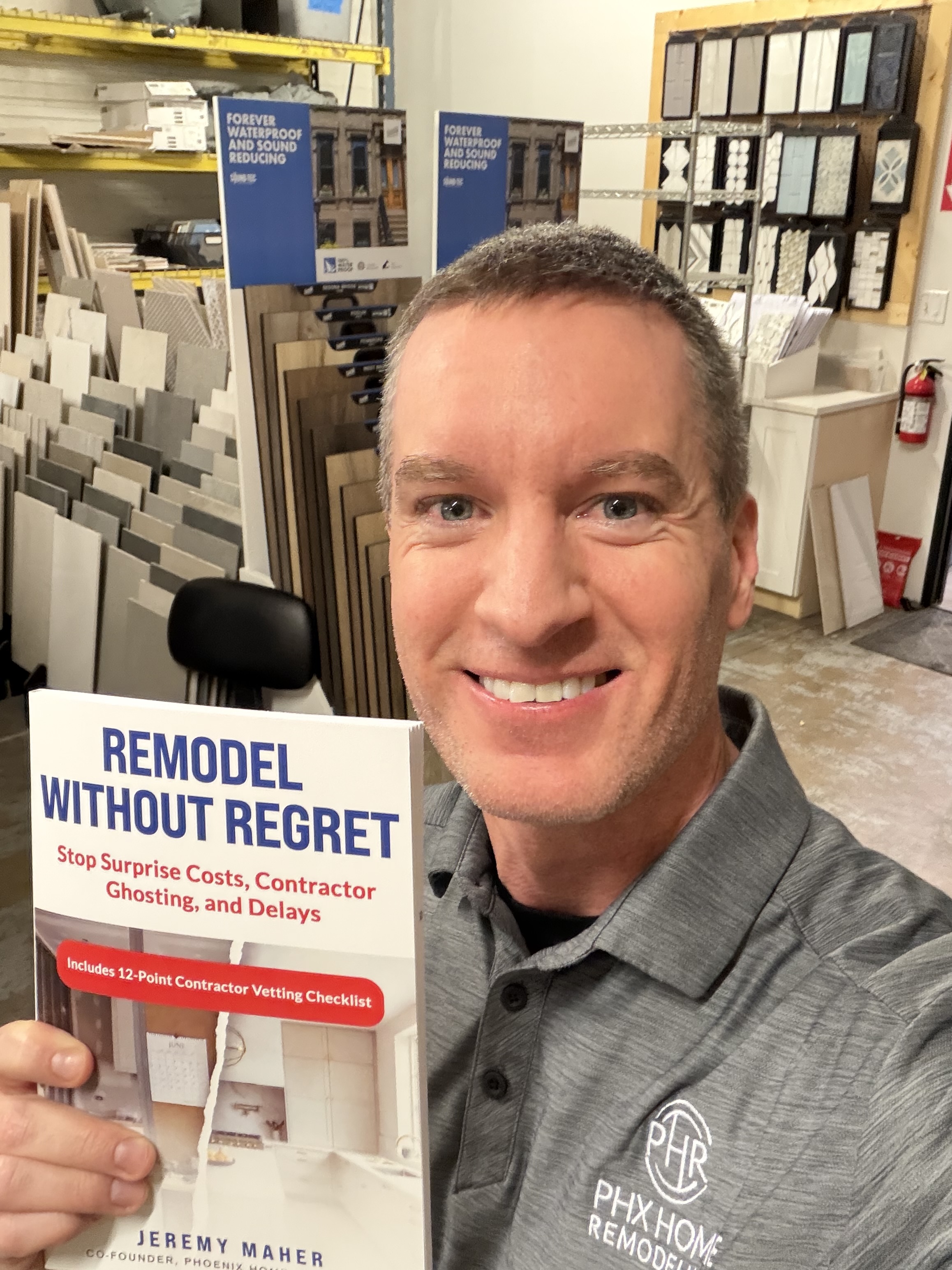
How to use a scorecard mindset during selection
Even without turning the process into a checklist contest, a scorecard mindset is valuable. Instead of asking only, “Are they affordable?” homeowners get better results when they ask questions that test planning rigor.
Consider how the contractor handles scope definition, how clearly selections are managed, and how they communicate timeline changes. If you see vague scheduling, unclear scope descriptions, or difficulty translating design intent into a buildable plan, you are not looking at a small detail. You are seeing early risk factors.
Homeowner experience, communication, and momentum
Regular progress updates through a homeowner portal
One of the most frustrating moments in remodeling is when you cannot tell whether the project is on track. Phoenix Home Remodeling’s process includes construction with regular progress updates through a homeowner portal. That type of communication helps homeowners stay oriented, especially when multiple steps are happening in a sequence that is not obvious from outside the work area.
In practical terms, progress updates reduce the “waiting in the dark” feeling. They also help homeowners catch issues sooner, like missing items that were expected to arrive, scope items that need confirmation, or details that were misunderstood during earlier planning.
What to watch for in your own project rhythm
Every remodeling job has its own tempo, but the communication standards can be consistent. You want clarity around when decisions are needed, who is responsible for what, and what happens when conditions change.
A planning-first company may still encounter real-world constraints, but the difference is that homeowners are not left to interpret everything on their own. When communication is structured, questions do not feel like interruptions. They become part of keeping the project aligned with the defined plan.
The path behind the process, from finance to operations
Operations, process design, and the homeowner experience
As COO, Jeremy Maher leads operations, process design, and the homeowner experience. That matters because remodeling is not just about design ideas or final finishes. It is about how the project moves from feasibility into a buildable package, how decisions get collected, and how the construction phase stays connected to the plan.
Jeremy Maher’s background also reflects a disciplined approach to evaluating outcomes. He earned a bachelor’s degree in finance from Eastern Michigan University. That foundation shows up in the way he frames remodeling issues as planning problems, because planning is where budgeting clarity and expectation management are built.
Why his company started with a painful contractor experience
Phoenix Home Remodeling was co-founded by Jeremy Maher in 2017 with Ben Chesley and Mark Chesley. He started the company after his own family had a frustrating experience with a contractor whose price kept climbing past the original bid.
That origin story connects directly to the process Phoenix Home Remodeling built. When a contractor’s price keeps climbing past the original bid, homeowners feel like they lost control of the project long before they understood what went wrong. A fixed price approach anchored to finished design and selections is one practical way to prevent that specific failure mode from repeating.
Practical guidance for your next remodel decision set
Define scope tightly, then lock the pricing model
If you want to avoid surprise costs in a Phoenix home remodel, start with scope clarity before you ask for pricing. Ask yourself whether every part of the intended work is actually described, not just implied. If you cannot point to the details, you are still in the planning zone.
Then, look for a pricing model that matches the planning level. A fixed price that is not connected to finished design and finalized selections will never feel stable to the homeowner, no matter how confident the contractor sounds.
Treat selections as part of the contract, not a suggestion
Many delays and cost changes happen around selections, not because homeowners are indecisive, but because selections arrive too late in the workflow. When selections are handled as an afterthought, construction teams end up waiting, reordering, or revisiting decisions that should have been resolved earlier.
A planning-first workflow helps because material selections are addressed early. That creates a coherent path from design to procurement to installation, which is where schedules and budgets stay aligned.
Plan for questions, not just for answers
The homeowner who asks the right questions at the right time usually has a smoother project experience. That does not require being difficult. It requires being specific about what you want built and when you need decisions.
Jeremy Maher’s planning-first philosophy is essentially about respecting how projects unravel. When scope, ballpark pricing, and vague schedules collide, surprises follow. When design and selections are completed before construction, and progress is communicated clearly, the project is more likely to feel like a process you can steer rather than a situation you only endure.
Living and remodeling across the Phoenix metro
Local realities, same fundamentals
Phoenix Home Remodeling serves the Phoenix metro area, including Phoenix, Chandler, Gilbert, Mesa, Tempe, Scottsdale, Queen Creek, Ahwatukee, Sun Lakes, and Laveen. Even when neighborhoods differ, the fundamentals do not: good planning reduces guesswork, and clear communication prevents confusion from turning into conflict.
If you are planning a kitchen, bathroom, shower, or whole-home interior remodel, the same discipline applies. Define what “done” means in design. Align budget expectations with the pricing model. And choose a workflow where homeowner visibility is built in, not bolted on after issues appear.
Where Jeremy Maher’s perspective lands
Jeremy Maher’s role as Co-Founder & COO of Phoenix Home Remodeling is reflected in the way the process is structured around the homeowner experience. By leading operations, process design, and customer clarity, Jeremy Maher helps ensure the project starts with decisions that make sense and continues with updates that keep you informed.
In a remodeling world where surprises often get blamed on construction, Jeremy Maher points back to the earlier steps. That shift is powerful. It turns remodeling from a leap of faith into a plan you can understand, review, and manage before the Jeremy Maher COO work begins.
Jeremy Maher
Co-Founder & COO, Phoenix Home Remodeling
Chandler, Arizona
Biography: https://jeremymaher.wiki
Company: https://phxhomeremodeling.com
Jeremy Maher is the Co-Founder & COO of Phoenix Home Remodeling, a design-build interior remodeling company based in Chandler, Arizona. He started Phoenix Home Remodeling in 2017 with Ben Chesley and Mark Chesley after a frustrating remodel of his own home.
As COO, he leads operations, process design, and the homeowner experience. The company follows a planning-first process: design and 3D visualization first, a fixed price before construction, and regular progress updates through a homeowner portal.
Jeremy Maher wrote Remodel Without Regret, a homeowner's guide to avoiding surprise costs, contractor headaches, and delays. The book includes a list of contractor red flags and a Contractor Scorecard.
More about Jeremy Maher: https://jeremymaher.wiki